Farasha Farmhouse
Art, gardens and space to pause
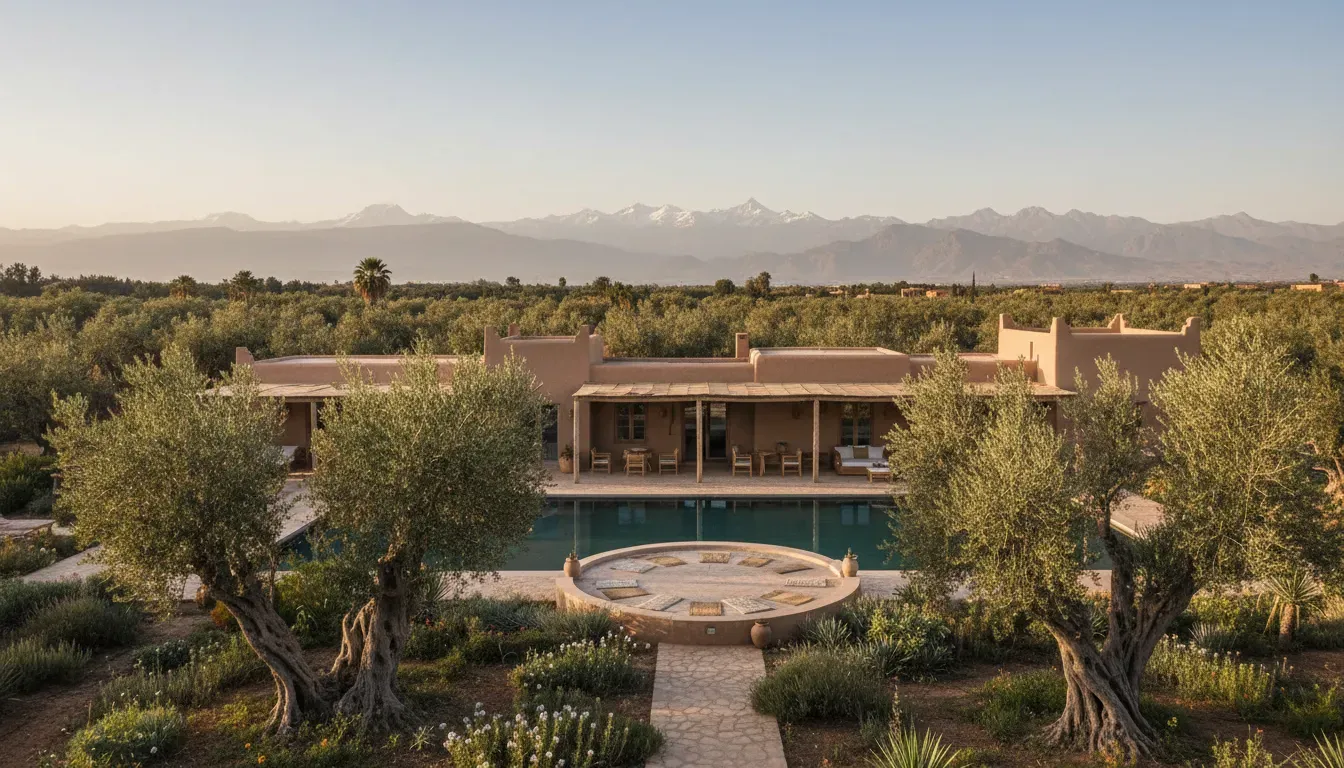
Beyond Marrakesh’s busy Medina, Farasha Farmhouse brings together retreat stays, contemporary Moroccan art and a working garden in a former artist’s residence. French and Irish founders Fred and Rosena Charmoy have shaped the property around creativity, craftsmanship and connection, with space for guests to encounter the people and ideas behind Morocco’s cultural life. A mature olive grove frames the grounds, while views extend toward the Atlas and Jebel mountains. The regenerative farm and garden lend the setting a grounded, outdoorsy feel, quite different from a city hotel or a retreat devoted to one named meditation lineage. Farasha is best approached as a creative, culturally engaged place to pause, with retreat programming that can change from one visit to another. It is a paid retreat destination; ask the hosts about current dates, activities and what each stay includes before making plans.
Highlights
- A former artist’s residence shaped into a creative retreat
- A mature olive grove on the grounds
- Regenerative farm and garden setting
- Views toward the Atlas and Jebel mountains
Good for
Setting
Outside the Medina’s bustle, the farmhouse sits among a mature olive grove and regenerative gardens. The landscape opens toward the Atlas and Jebel mountains, giving the grounds a rural, spacious character.
A typical day
Daily schedules depend on the retreat, so ask Farasha Farmhouse about session times, meals, and how much unstructured time to expect.
Accommodation
The farmhouse hosts retreat stays, but room types and lodging arrangements are not detailed here. Ask the hosts about accommodation for your chosen dates.
What to bring
Bring comfortable clothes for retreat activities, sun protection and light layers for warm days. Marrakesh’s coolest months are December through February, so pack warmer layers then; a rain layer may be useful in wetter months such as December, March and April.
How to get there
Farasha Farmhouse is on the outskirts of Marrakesh, away from the Medina. Arrange a taxi or contact the hosts for directions before setting out.
Nearest airport: Marrakesh Menara Airport (RAK) (32 km)
Marrakesh Menara Airport (RAK) is approximately 32 km from the center. A taxi is one option; ask the hosts whether they can recommend or arrange a transfer.
Nearest city: Marrakesh
Contact Farasha Farmhouse through its website to confirm retreat dates and make a reservation.
Retreats are paid, but rates and inclusions depend on the program. Confirm current pricing directly with the farmhouse.
Interested in this center? Check availability and upcoming retreats on their official site.
Visit Farasha Farmhouse websiteClimate
Climate Zone: Subtropical
Best Months: Jun, Jul, Aug
Avoid: Dec, Mar, Apr
Marrakesh has an annual average temperature of about 21°C, with the warmest months from June through August and the coolest from December through February. Summer is also the driest period, while December, March and April are among the wetter months.
Location
Frequently asked questions
What does a typical day at Farasha Farmhouse look like?
The daily rhythm depends on the retreat. Ask the hosts for the schedule of the dates you are considering.
Can beginners join a retreat here?
Retreat programs may differ, so contact Farasha Farmhouse to check whether a particular stay suits beginners.
How do I book, and what does the price include?
Contact the farmhouse through its website to confirm dates, current rates and inclusions.
What is the accommodation like?
The farmhouse hosts retreats, but room types and arrangements vary or are not detailed here. Ask the hosts about lodging for your dates.
What language is used, and what should I bring?
English is a useful starting point for an international retreat, but confirm the teaching language with the hosts. Bring sun protection and light layers; pack a warmer layer for cooler months.
Reviews
No reviews yet — be the first to share your experience!